





EBOOK IN LINGUA STRANIERA





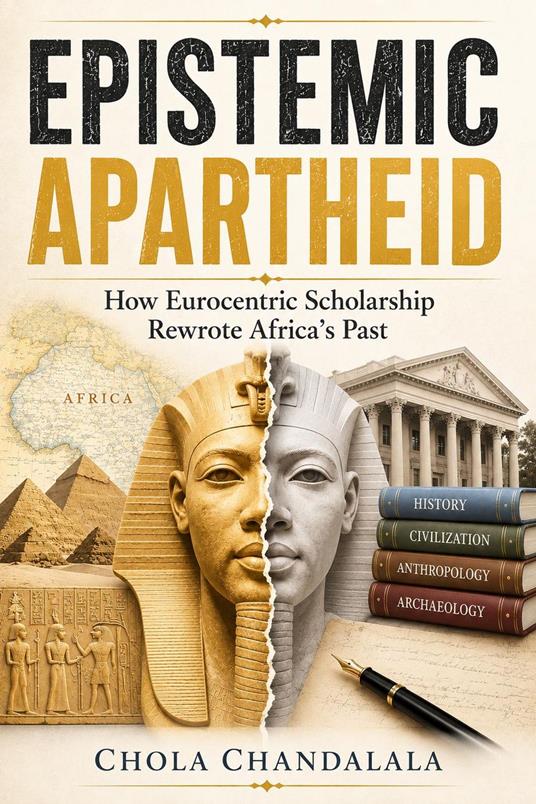
EPISTEMIC APARTHEID: How Eurocentric Scholarship Rewrote Africa's Past

3,49 €
+30
punti 
Venditore: Feltrinelli

Acquista online
Scaricabile subito
Articolo acquistabile con Carta del Docente

Articolo acquistabile con Carta Cultura Giovani e Carta del Merito

Articolo acquistabile con Carta della Cultura

Abbonati a Kobo plus per avere accesso illimitato a questo contenuto

Dati e Statistiche
 Salvato in 0 liste dei desideri
Salvato in 0 liste dei desideri
EPISTEMIC APARTHEID: How Eurocentric Scholarship Rewrote Africa's Past
Scaricabile subito
3,49 €
3,49 €
Scaricabile subito


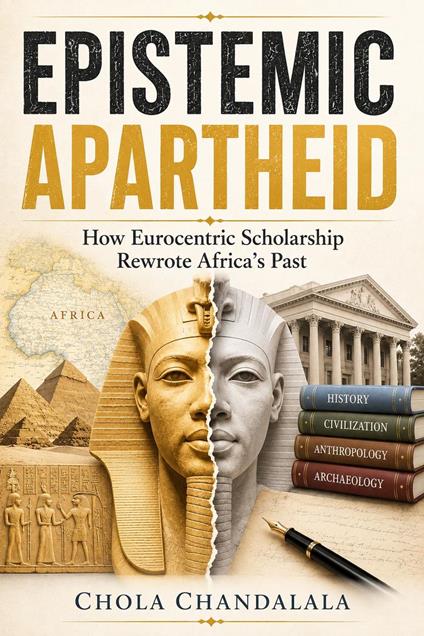
Who decides what counts as history? Who decides whose knowledge is credible? And why has Africa so often been excluded from the story of civilization? For centuries, the achievements, philosophies, and intellectual traditions of Africa have been filtered through Eurocentric frameworks that often privileged European interpretations while dismissing African voices. In Epistemic Apartheid, Chola Chandalala argues that this pattern is not merely accidental—it reflects a long-standing imbalance in how knowledge has been produced, evaluated, and institutionalized. Drawing on history, archaeology, biblical studies, anthropology, Egyptology, philosophy, and postcolonial scholarship, this provocative work examines how academic authority has shaped public understanding of Africa's past. It explores the standards by which evidence is accepted or rejected, the politics of peer review, the treatment of oral traditions, and the enduring influence of colonial assumptions within historical scholarship. Rather than asking readers to accept Afrocentric claims uncritically, the book challenges them to ask a more fundamental question: Are all historical claims evaluated by the same standards of evidence? Inside, you'll discover: • Why some historical narratives become "accepted truth" while others remain marginalized. • How colonial-era assumptions continue to influence modern scholarship. • The debates surrounding Ancient Egypt, African civilizations, and the origins of knowledge. • The role of archaeology, linguistics, oral traditions, and classical sources in reconstructing African history. • How influential scholars—including Cheikh Anta Diop, Théophile Obenga, Martin Bernal, Ivan Van Sertima, and others—challenged established academic orthodoxies. • Why the struggle over Africa's past remains central to global conversations about identity, education, and intellectual justice. Bold yet carefully documented, Epistemic Apartheid does not merely revisit familiar debates—it invites readers to reconsider how history itself is written, who has the authority to write it, and what is at stake when entire civilizations are denied equal standing in humanity's shared story. Whether you are a student, educator, historian, researcher, or simply a curious reader interested in African history, decolonization, and the politics of knowledge, this book offers a thought-provoking exploration of one of the most important intellectual debates of our time.
-
Autore:
-
Anno edizione:2026
-
Editore:
-
Formato:
-
Lingua:Inglese
Compatibilità:
Tutti i dispositivi (eccetto Kindle) Scopri di più
Layout:
Reflowable
EAN:
9798235232341

Formato:
Gli eBook venduti da Feltrinelli.it sono in formato ePub e possono essere protetti da Adobe DRM. In caso di download di un file protetto da DRM si otterrà un file in formato .acs, (Adobe Content Server Message), che dovrà essere aperto tramite Adobe Digital Editions e autorizzato tramite un account Adobe, prima di poter essere letto su pc o trasferito su dispositivi compatibili.
Cloud:
Gli eBook venduti da Feltrinelli.it sono sincronizzati automaticamente su tutti i client di lettura Kobo successivamente all’acquisto. Grazie al Cloud Kobo i progressi di lettura, le note, le evidenziazioni vengono salvati e sincronizzati automaticamente su tutti i dispositivi e le APP di lettura Kobo utilizzati per la lettura.
Clicca qui per sapere come scaricare gli ebook utilizzando un pc con sistema operativo Windows
