





EBOOK IN LINGUA STRANIERA





Gospels before the Book

29,01 €
+290
punti 
Venditore: Feltrinelli

Acquista online
Scaricabile subito
Articolo acquistabile con Carta del Docente

Articolo acquistabile con Carta Cultura Giovani e Carta del Merito

Articolo acquistabile con Carta della Cultura

Dati e Statistiche
 Salvato in 0 liste dei desideri
Salvato in 0 liste dei desideri
Gospels before the Book
Scaricabile subito
29,01 €
29,01 €
Scaricabile subito


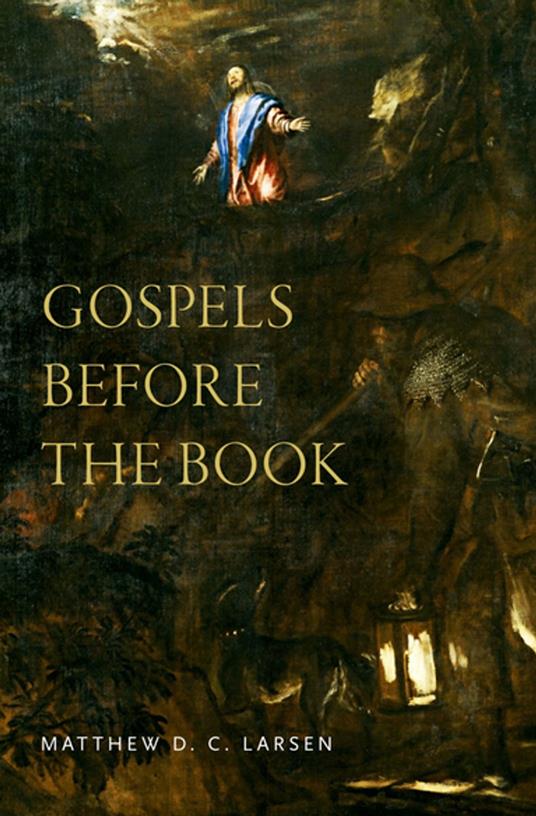
What does it look like to read the texts we now call the gospels like first- and second-century readers? There is no evidence of anyone regarding the gospel as a book published by an author until the end of the second century. So, put differently, what does it mean to read the gospels "before the book"? For centuries, the ways people discuss the gospels have been shaped by later ideas that have more to do with the printing press and modern notions of the author than ancient writing and reading practices. In Gospels before the Book, Matthew D. C. Larsen challenges several subtle yet problematic assumptions about authors, books, and publication at work in early Christian studies. He then explores a host of under-appreciated elements of ancient textual culture such as unfinished texts, accidental publication, post-publication revision, and the existence of multiple authorized versions of the same work. Turning to the gospels, he argues that the earliest readers and users of the text we now call the Gospel according to Mark treated it not as a book published by an author, but as an unfinished, open, and fluid collection of notes (hypomnmata). In such a scenario, the Gospel according to Matthew would not be regarded as a separate book published by a different author, but as a continuation of the same unfinished gospel tradition. Similarly it is not the case that, of the five different endings in the textual tradition we now call the Gospel according to Mark, one is "right" and the others are "wrong." Rather each represents its own effort to fill a perceived deficiency in the gospel. Larsen offers a new methodological framework for future scholarship on early Christian gospels.
-
Autore:
-
Anno edizione:2018
-
Editore:
-
Formato:
-
Lingua:Inglese
Compatibilità:
Tutti i dispositivi (eccetto Kindle) Scopri di più
Layout:
Reflowable
EAN:
9780190848606

Formato:
Gli eBook venduti da Feltrinelli.it sono in formato ePub e possono essere protetti da Adobe DRM. In caso di download di un file protetto da DRM si otterrà un file in formato .acs, (Adobe Content Server Message), che dovrà essere aperto tramite Adobe Digital Editions e autorizzato tramite un account Adobe, prima di poter essere letto su pc o trasferito su dispositivi compatibili.
Cloud:
Gli eBook venduti da Feltrinelli.it sono sincronizzati automaticamente su tutti i client di lettura Kobo successivamente all’acquisto. Grazie al Cloud Kobo i progressi di lettura, le note, le evidenziazioni vengono salvati e sincronizzati automaticamente su tutti i dispositivi e le APP di lettura Kobo utilizzati per la lettura.
Clicca qui per sapere come scaricare gli ebook utilizzando un pc con sistema operativo Windows
