





LIBRO INGLESE





The Politics of Cancer: Malignant Indifference

81,90 €
+820
punti 
Venditore: Feltrinelli
Articolo acquistabile con Carta del Docente

Articolo acquistabile con Carta Cultura Giovani e Carta del Merito

Articolo acquistabile con Carta della Cultura

Paga con Klarna in 3 rate senza interessi per ordini superiori a 39 €

Dati e Statistiche
 Salvato in 0 liste dei desideri
Salvato in 0 liste dei desideri
The Politics of Cancer: Malignant Indifference
Disponibilità in 2 settimane
81,90 €
81,90 €
Disponibilità in 2 settimane
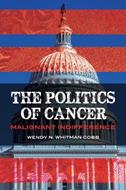


This book examines the politics of cancer, explains how our government is intrinsically tied to cancer research efforts, and documents how major political actors make cancer policy and are influenced in their decision making by political, social, scientific, and economic variables. Is whether we contract cancer—and whether we survive the disease, if we get it—largely just a result of good versus bad luck, or are these outcomes regarding cancer tied to the policies and actions of our federal government? Cancer-treating drug development and approval is overseen by the U.S. Food and Drug Administration, billions of dollars of federal money are devoted towards cancer research, and exposure of citizens to potentially cancer-causing environments or chemicals is regulated by the Environmental Protection Agency. Additionally, all of these factors can be affected by the political motivations of our most powerful politicians. The Politics of Cancer: Malignant Indifference analyzes the policy environment of cancer in America: the actors, the political institutions, the money, and the disease itself, identifying how haphazard U.S. government policy toward cancer research has been and how the president, Congress, government bureaucracies, and even the cancer industry have failed to meet timelines and make the expected discoveries. Whitman Cobb examines funding for the National Cancer Institute and the roles of the executive, Congress, policy entrepreneurs, and the bureaucracy as well as that of the state of cancer science. She argues that despite the so-called "war on cancer," no strategic, comprehensive government policy has been imposed—leading to an indecisive cancer policy that has significantly impeded cancer research. Written from a political science perspective, the book offers insight into the realities of science policy and the ways in which the federal government is both the source of funding for much of cancer research and often deficient in setting comprehensive and consistent anti-cancer policy. Readers will come to understand how Congress, the president, the bureaucracy, and the cancer industry all share responsibility for the current state of cancer policy confusion and consider whether pharmaceutical companies, for-profit cancer treatment hospitals, and interest groups like the American Cancer Society have a personal incentive to keep the fight alive.
-
Autore:
-
Editore:
-
Anno:2017
-
Rilegatura:Hardback
-
Pagine:216 p.
Testo in English
Dimensioni:
235 x 156 mm
Peso:
567 gr.
EAN:
9781440853302

Informazioni e Contatti sulla Sicurezza dei Prodotti
Le schede prodotto sono aggiornate in conformità al Regolamento UE 988/2023. Laddove ci fossero taluni dati non disponibili per ragioni indipendenti da Feltrinelli, vi informiamo che stiamo compiendo ogni ragionevole sforzo per inserirli. Vi invitiamo a controllare periodicamente il sito www.lafeltrinelli.live per eventuali novità e aggiornamenti.
Per le vendite di prodotti da terze parti, ciascun venditore si assume la piena e diretta responsabilità per la commercializzazione del prodotto e per la sua conformità al Regolamento UE 988/2023, nonché alle normative nazionali ed europee vigenti.
Per informazioni sulla sicurezza dei prodotti, contattare productsafety@feltrinelli.it
