





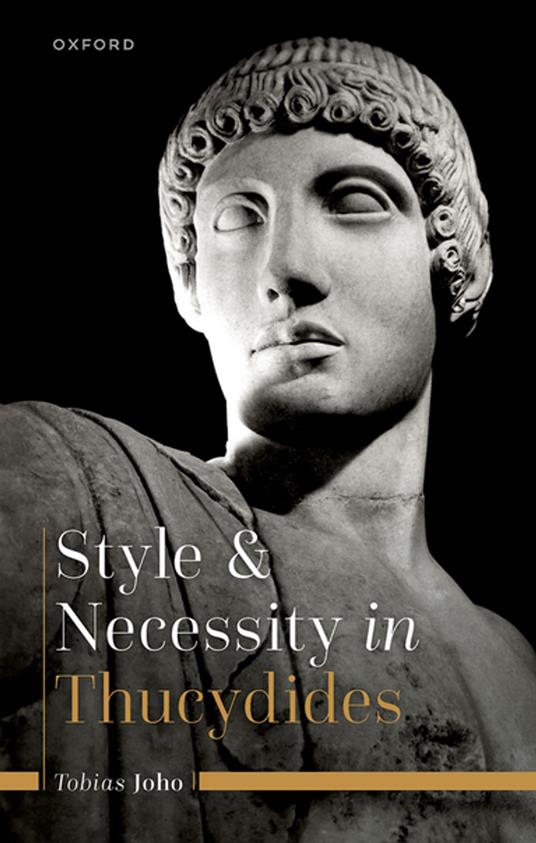
EBOOK IN LINGUA STRANIERA





Style and Necessity in Thucydides

98,89 €
+990
punti 
Venditore: Feltrinelli

Acquista online
Scaricabile subito
Articolo acquistabile con Carta del Docente

Articolo acquistabile con Carta Cultura Giovani e Carta del Merito

Articolo acquistabile con Carta della Cultura

Dati e Statistiche
 Salvato in 0 liste dei desideri
Salvato in 0 liste dei desideri
Style and Necessity in Thucydides
Scaricabile subito
98,89 €
98,89 €
Scaricabile subito


Ancient literary critics were struck by what they described as Thucydides' "nominal style," a term that refers to Thucydides' fondness for abstract nominal phrases. As this book shows, Thucydides frequently uses these phrases instead of approximately synonymous verbal and personal constructions. These stylistic choices tend to deemphasize human agency: people find themselves in a passive role, exposed to incidents happening to them rather than being actively in charge of events. Thus, the analysis of the abstract style raises the question of necessity in Thucydides. On numerous occasions, Thucydides and his speakers use impersonal and passive language to stress the subjection of human beings to transpersonal forces that manifest themselves in collective passions and an inherent dynamic of events. These factors are constitutive of the human condition and become a substitute for the notion of divine fatalism prevalent in earlier Greek thought. Yet Thucydidean necessity is not absolute. It stands in the tradition of a type of fatalism that one finds in Homer and Herodotus. In these authors, the gods or fate tend to settle the outcome of the most significant events, but they leave leeway for the specific way in which these pivotal events come to pass. Thus, the Greeks endorsed a malleable variant of necessity, so that considerable scope for human choice persists within the framework fixed by necessity. Pericles turns out to be Thucydides' prime example of an individual who uses the leeway left by necessity for prudent interventions into the course of events.
-
Autore:
-
Anno edizione:2022
-
Editore:
-
Formato:
-
Lingua:Inglese
Compatibilità:
Tutti i dispositivi (eccetto Kindle) Scopri di più
Layout:
Reflowable
EAN:
9780192540034

Formato:
Gli eBook venduti da Feltrinelli.it sono in formato ePub e possono essere protetti da Adobe DRM. In caso di download di un file protetto da DRM si otterrà un file in formato .acs, (Adobe Content Server Message), che dovrà essere aperto tramite Adobe Digital Editions e autorizzato tramite un account Adobe, prima di poter essere letto su pc o trasferito su dispositivi compatibili.
Cloud:
Gli eBook venduti da Feltrinelli.it sono sincronizzati automaticamente su tutti i client di lettura Kobo successivamente all’acquisto. Grazie al Cloud Kobo i progressi di lettura, le note, le evidenziazioni vengono salvati e sincronizzati automaticamente su tutti i dispositivi e le APP di lettura Kobo utilizzati per la lettura.
Clicca qui per sapere come scaricare gli ebook utilizzando un pc con sistema operativo Windows
